ADVERTISEMENT
Potatoes are a staple in many households, loved for their versatility and delicious taste. Around here in the Midwest, a sack of potatoes has long been one of those pantry comforts you count on without much thought, tucked away for suppers big and small. However, they can sometimes sit forgotten in a pantry, leading to a surprising transformation.
As time passes, these humble tubers may begin to sprout, raising questions about their safety and edibility. The sight of sprouted potatoes can be alarming, and many wonder if it’s safe to consume them after removing the sprouts. This article delves into the science behind sprouted potatoes, exploring potential risks and offering guidance on how to handle them safely.
Understanding the implications of consuming sprouted potatoes is crucial for maintaining a healthy diet. While many people have eaten sprouted potatoes without incident, it’s important to be aware of the potential toxins and the conditions under which they might pose a risk. By examining the facts, we can make informed decisions about whether to cook and eat these sprouted spuds or discard them altogether.
ADVERTISEMENT
1. What Happens When Potatoes Start Sprouting?
When potatoes start sprouting, it means they are beginning to grow new plants. The sprouts, also known as “eyes,” may appear as shoots emerging from the potato’s surface. This process is a natural response to extended storage, especially in conditions that favor growth, such as warmth and humidity. Potatoes contain enough stored energy in the form of starch to support the initial growth of these sprouts.
As potatoes sprout, they begin converting their starches into sugars to fuel the new growth. This conversion can affect the texture and taste of the potato, making it less palatable. Additionally, the presence of sprouts can indicate an increase in certain compounds that might be harmful if consumed in large quantities.
2. The Truth About Solanine And Potato Toxins
Potatoes naturally contain a glycoalkaloid called solanine, which serves as a defense mechanism against pests and diseases. While solanine is present in all potatoes, its concentration can increase in response to light exposure or physical damage. Typically, the levels of solanine in potatoes are low and not harmful. However, when potatoes sprout or turn green, solanine levels can rise to potentially toxic levels.
High solanine consumption can lead to symptoms such as nausea, vomiting, and neurological issues. The toxic dose of solanine is estimated to be 2-5 mg per kg of body weight, meaning that a 70 kg person would need to ingest 140-350 mg of solanine to experience toxic effects. In practical terms, this would require consuming a significant amount of green or heavily sprouted potatoes.
3. Are Sprouted Potatoes Always Unsafe To Eat?
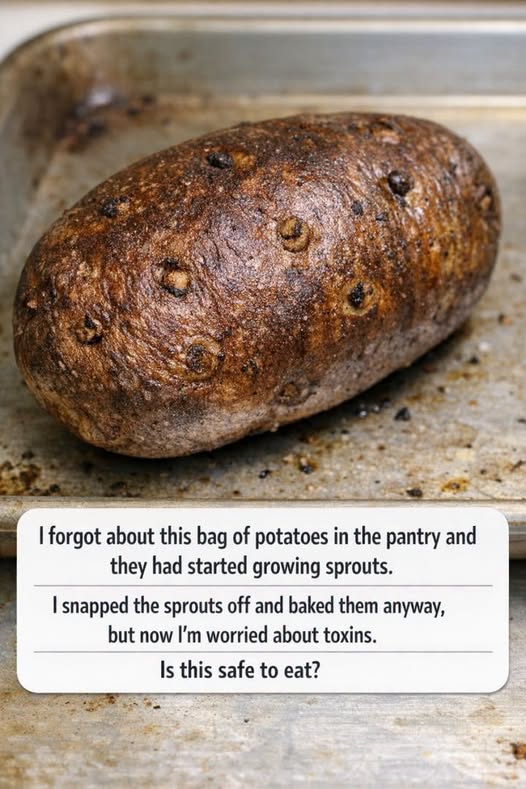
Not all sprouted potatoes are unsafe to eat, but caution is advised. The safety of sprouted potatoes largely depends on the extent of sprouting and any accompanying changes in the potato’s color or texture. If the sprouts are small and the potato is otherwise firm and not green, it is generally safe to remove the sprouts and consume the potato.
However, if the potato has extensive sprouting, soft spots, or green patches, it is best to err on the side of caution and discard it. These signs suggest a higher concentration of solanine and other glycoalkaloids, which could pose a health risk if consumed.
4. How Much Sprouting Is Too Much? Visual Red Flags To Check
See more on the next page to continue reading →
ADVERTISEMENT