ADVERTISEMENT
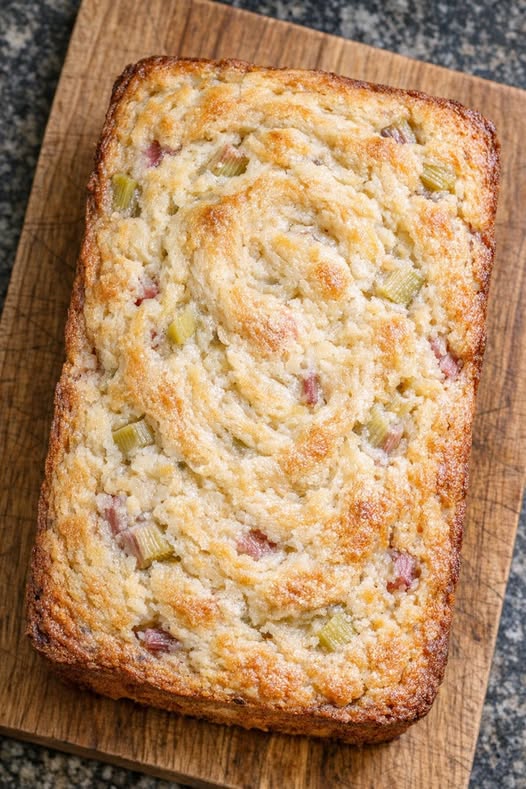
You can adjust this rhubarb vanilla loaf to suit your kitchen and your taste while keeping its comforting, old-fashioned character. For a slightly tangier loaf, use buttermilk instead of regular milk, which echoes the way many Midwestern grandmothers baked with what they had on hand. If you prefer a more pronounced vanilla flavor, add an extra 1/2 teaspoon of vanilla extract or scrape in the seeds from half a vanilla bean.
To add a gentle crunch, stir 1/2 cup of chopped toasted almonds or walnuts into the batter with the rhubarb, or sprinkle them over the top along with the sugar before baking. A teaspoon of finely grated orange or lemon zest folded into the batter brightens the rhubarb’s natural tartness. For a lighter sweetness, you can reduce the sugar in the batter to 3/4 cup, though the loaf will be a bit less tender.
If you need to use frozen rhubarb, thaw it fully, drain off any excess liquid, and pat it dry before chopping and folding it into the batter; this helps avoid a soggy center. For a small household, you can bake the batter in two smaller loaf pans (about 8×4 inches) and reduce the baking time to around 35–45 minutes, checking early.
Food safety tips: Rhubarb leaves are toxic and should never be eaten; always discard them and use only the stalks. Wash the stalks well to remove any dirt or garden residue before chopping. Make sure the loaf bakes through to the center—look for a clean or nearly clean toothpick—to avoid a gummy, underbaked interior.
Once cooled, store the loaf tightly wrapped at room temperature for up to 2 days, or refrigerate if your kitchen is very warm; for longer storage, slice and freeze in an airtight container for up to 2 months, thawing slices at room temperature or briefly toasting them before serving.
ADVERTISEMENT