ADVERTISEMENT
Choosing the right components is absolutely essential for achieving that perfect, custardy texture.
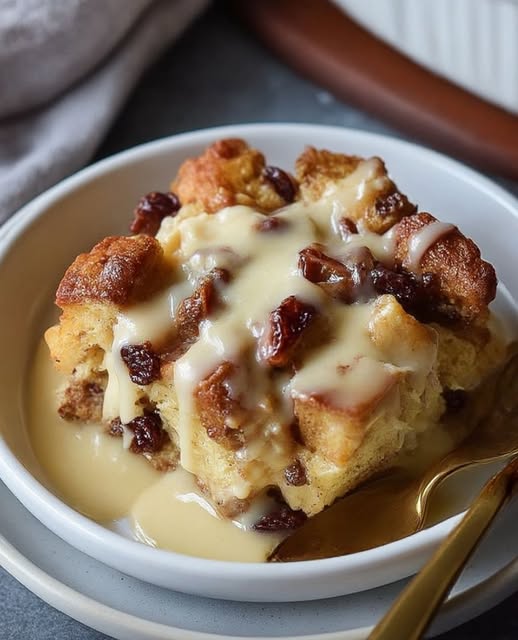
Stale Challah Bread: Challah is an enriched egg bread that provides a wonderfully tender crumb and a slightly sweet flavor. Using a stale loaf is mandatory, as fresh bread contains too much moisture and will turn your pudding into a soggy paste.
Heavy Cream and Whole Milk: This dynamic dairy duo provides the necessary milk fats to create a rich, stable custard that will not curdle under the high oven heat.
ADVERTISEMENT
Raisins: These provide natural sweetness and a wonderful chewy texture that contrasts beautifully with the soft, baked pudding.
Cinnamon and Vanilla: These warm, aromatic spices elevate the flavor profile, giving the dessert its signature, nostalgic bakery taste.
(Remember, you will find the exact ingredient measurements and step-by-step instructions in the recipe card at the bottom of this page!)
Easy Substitutions & Variations
This versatile baked dessert is incredibly easy to customize based on what you currently have sitting in your pantry.
If you cannot find a loaf of challah, brioche or thick-cut French bread make absolutely fantastic substitutes.
Just be sure to leave your sliced bread out on the counter overnight so it dries out sufficiently!
Not a fan of raisins?
You can easily swap them out for dried cranberries, chopped dates, or even dried cherries for a slightly tarter flavor profile.
For a decadent chocolate twist, try folding a cup of semi-sweet chocolate chips into the soaked bread mixture just before baking.
If you want to add a delightful crunch to the topping, sprinkle a handful of chopped pecans or walnuts over the dish before returning it to the oven uncovered.
Pro Tips for Success
Following these specific culinary techniques will guarantee your bread pudding turns out absolutely flawless.
Plump the Raisins: Do not skip the step of boiling the raisins in the spiced butter and water mixture! Rehydrating the dried fruit ensures they remain plump and juicy during the long baking process, rather than turning hard and burnt.
Let the Bread Soak: You must allow the cubed bread to sit in the liquid custard mixture for at least ten full minutes before baking. This crucial resting period ensures the starches fully absorb the heavy cream and eggs, preventing dry pockets inside the baked pudding.
Master the Foil Cover: Keep the baking dish tightly covered with aluminum foil for the first fifty minutes of baking. This traps the steam and cooks the custard gently, while removing the foil at the very end perfectly caramelizes the top layer.
Storage and Reheating
See more on the next page to continue reading →
ADVERTISEMENT