ADVERTISEMENT
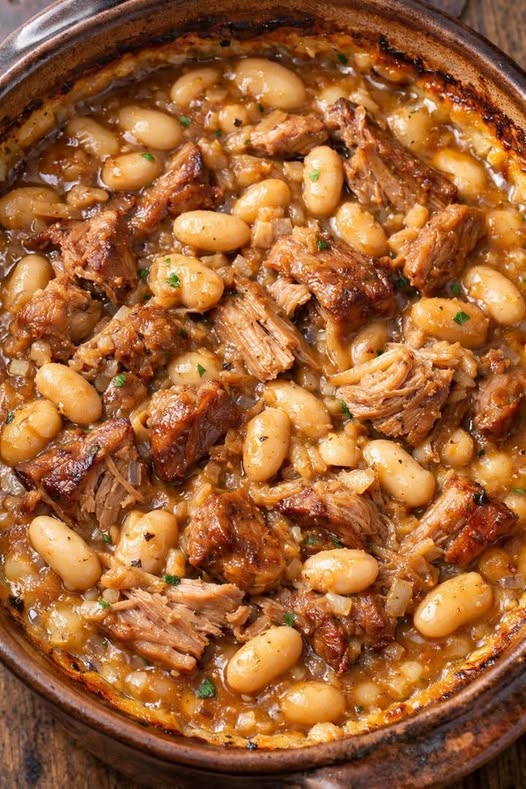
This oven baked 4-ingredient pork and dried bean casserole is the kind of dish my aunt still pulls out every April, just like her mother did when money was tight but the table still had to be full. It’s built on pantry basics: inexpensive pork, dried beans, onions, and a simple gravy that turns rich and velvety in the oven. Long, slow baking transforms humble ingredients into something deeply savory and comforting—fall-apart tender pork tucked into creamy beans, all in one big brown casserole that can feed a crowd for just a few dollars.
Serve this casserole straight from the oven with a big spoon and let everyone help themselves. I like it with a simple green salad dressed in vinegar and a loaf of crusty bread or cornbread to mop up the gravy. Steamed or roasted carrots, cabbage, or frozen peas warmed in butter all fit the old-fashioned, budget-friendly spirit. A splash of vinegar or a spoonful of pickle relish on the side brightens the richness, and if you have it, a little hot sauce on the table makes people very happy.
Oven-Baked Pork and Dried Bean Casserole
Servings: 8–10
Ingredients
1 pound (about 2 cups) dried white beans (navy, Great Northern, or cannellini), picked over and rinsed
2 pounds boneless pork shoulder or country-style pork ribs, trimmed and cut into 1 1/2-inch chunks
2 large yellow onions, peeled and thinly sliced
4 cups (1 quart) low-sodium chicken or pork broth, plus more water as needed
Directions
Soak the beans: Place the dried white beans in a large bowl and cover with plenty of cool water (at least 2 inches above the beans). Let soak at room temperature for 8–12 hours or overnight. Drain and rinse before using. (If you forget to soak, see variations for a quick-soak method.)
Preheat the oven: When you’re ready to cook, adjust an oven rack to the lower-middle position and preheat the oven to 325°F (165°C). Lightly grease a large, deep casserole dish (about 3–4 quarts, ideally stoneware or enameled cast iron).
Layer the onions and beans: Spread the sliced onions evenly over the bottom of the casserole dish. Scatter the drained, soaked beans over the onions in an even layer. This base helps the beans cook evenly and lets the onions melt into the gravy.
Season and arrange the pork: Pat the pork pieces dry with paper towels so they brown and cook more cleanly. Generously season them on all sides with salt and black pepper (about 1 1/2–2 teaspoons kosher salt and 1 teaspoon pepper is a good starting point; adjust to taste). Nestle the pork chunks into the beans and onions, distributing them evenly so every scoop later has some meat and beans.
Add the broth to make the gravy base: Pour the broth over the pork and beans. The liquid should just come level with the beans and pork or barely cover them. If needed, add a little water to reach that level. Gently press down with a spoon to settle everything without breaking up the layers.
Cover and bake low and slow: Cover the casserole tightly with a lid or a double layer of foil to trap moisture. Place in the preheated oven and bake for 2 1/2 hours. This slow, covered bake allows the beans to soften and the pork to begin turning tender while building a savory, starchy gravy.
Check liquid level and continue baking: After 2 1/2 hours, carefully remove the casserole from the oven and uncover it away from your face to avoid steam. Stir gently from the bottom to loosen any beans that may be settling, and check the liquid level. The beans should be mostly submerged in a brothy gravy. If they look dry or the top layer is not covered, add 1/2–1 cup hot water or hot broth, stirring gently to combine.
Finish baking uncovered for color and thickening: Return the casserole to the oven, uncovered, and continue baking for 45–75 minutes, stirring once or twice during this time. You’re looking for the pork to become fall-apart tender and the beans to be fully creamy inside, with the liquid reduced to a thick, spoon-coating gravy. The edges should be bubbling and slightly golden where the gravy meets the sides of the dish.
Rest before serving: When the pork is very tender and the beans are soft and creamy, remove the casserole from the oven. Taste the gravy and adjust seasoning with a bit more salt and pepper if needed. Let the dish rest for 10–15 minutes; this short rest allows the bubbling to calm down and the gravy to thicken just a bit more, making it easier to serve neat portions.
Serve: Bring the brown stoneware casserole right to the table and serve the pork and beans hot, making sure each scoop includes some of the thick gravy from the bottom. Store leftovers, cooled, in the refrigerator for up to 4 days, or freeze in airtight containers for up to 3 months. Reheat gently with a splash of water or broth to loosen the gravy.
Variations & Tips
Bean options: Any small to medium white bean works: navy, Great Northern, or cannellini. In harder times, my aunt would mix whatever dried beans she had—pinto, kidney, or even a few lentils—so feel free to use a mix, understanding that different beans may soften at slightly different rates. If you use larger beans, you may need an extra 15–20 minutes of baking. Quick-soak method: If you forget to soak overnight, place the dried beans in a pot, cover with water by 2 inches, bring to a boil for 2 minutes, then turn off the heat, cover, and let sit for 1 hour. Drain, rinse, and proceed with the recipe. Quick-soaked beans can sometimes cook a little faster, so start checking for doneness toward the earlier end of the baking time. Pork choices and budget tips: Pork shoulder is ideal because it has enough fat to stay moist and turn shreddy-tender. Country-style ribs (boneless or bone-in) also work well and were often what my aunt used when they were on sale. If you use leaner cuts like pork loin, the meat may dry out; in that case, cut it into larger chunks and check earlier for doneness. To stretch the meat further, add an extra 1/2 cup of dried beans and a bit more broth. Flavor boosters using pantry staples: To keep the ingredient list simple and true to the spirit of the dish, the base recipe uses just pork, beans, onions, and broth. If your pantry allows, you can deepen the flavor with a teaspoon or two of dried herbs (thyme, oregano, or bay leaves), a spoonful of tomato paste, or a splash of Worcestershire sauce added with the broth. A small ham bone or a few slices of bacon layered with the onions is another traditional trick to add smokiness without much cost. Texture adjustments: If you prefer a looser, soupier casserole, simply add an extra cup of broth or water before the final uncovered bake and reduce the time slightly so it doesn’t thicken too much. For a thicker, almost spoon-standing texture, let it bake uncovered a bit longer, stirring occasionally so the top doesn’t dry out. Remember that the beans will continue to absorb liquid as they cool, so it’s fine if the gravy looks a touch looser than you want when you first take it out. Make-ahead and reheating: This casserole actually improves after a night in the refrigerator as the flavors meld. Cool completely, cover tightly, and refrigerate. Reheat in a 300°F (150°C) oven, covered, with a splash of water or broth, stirring once or twice until hot all the way through. On the stovetop, warm gently over low heat with a bit of added liquid, stirring often to prevent sticking. Food safety tips: Always soak dried beans in fresh, cool water and discard the soaking water; this helps remove some indigestible compounds and any dust from storage. Never cook dried beans in water that has been used to soak them. If you ever use red kidney beans in a mixed-bean version, they must be boiled briskly in fresh water for at least 10 minutes before baking to neutralize natural toxins. Keep raw pork refrigerated until you’re ready to cook, and wash your hands, knives, and cutting boards thoroughly after handling it. Leftovers should be cooled and refrigerated within 2 hours of cooking. Reheat leftovers to at least 165°F (74°C) and do not reheat more than once for best quality and safety. Scaling for a crowd: This recipe doubles easily if you have a very large roasting pan or two casserole dishes. When scaling up, keep the beans in a relatively shallow layer so they cook evenly; you may need to add a bit more broth and extend the baking time by 15–30 minutes, checking for tender beans and fall-apart pork before serving.
ADVERTISEMENT