ADVERTISEMENT
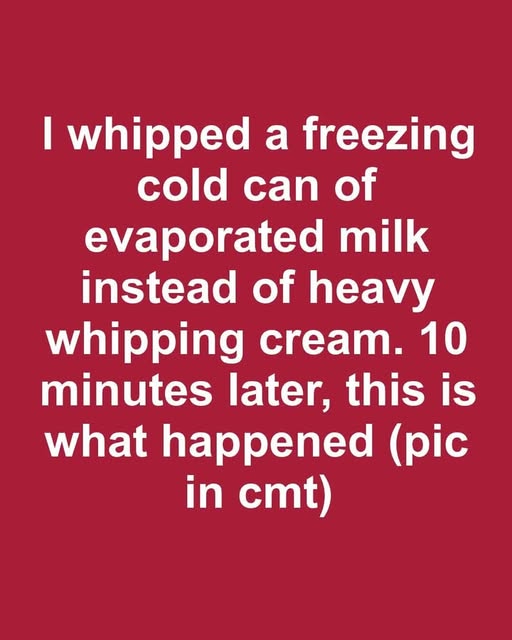
The science behind whipping evaporated milk lies in its protein and fat content. Heavy cream contains around 36% fat, which is essential for forming stable peaks when whipped. In contrast, evaporated milk has only about 6-8% fat, which makes it challenging to achieve the same results.
The proteins in evaporated milk, when chilled and whipped, can trap air to some extent, creating a foamy texture. However, without the higher fat content, the stability and volume are significantly reduced compared to heavy cream. This scientific limitation explains why evaporated milk can only achieve a certain level of frothiness and not the stiff peaks of traditional whipped cream.
9. How To Improve The Results: Add-Ins, Stabilizers, And Technique Tweaks
To improve the results when whipping evaporated milk, certain add-ins and techniques can be employed. Adding a small amount of unflavored gelatin to the milk before whipping can help stabilize the mixture, allowing it to hold its shape better. Dissolve a teaspoon of gelatin in a tablespoon of warm water and mix it into the evaporated milk before chilling.
Another technique is to add a bit of powdered sugar, which can not only sweeten the mixture but also help improve its stability. Whipping the milk on a high speed after initially incorporating air at a medium speed can further enhance the volume and texture. These tweaks can help create a more stable and satisfying whipped evaporated milk.
10. When This Hack Actually Works—And When It Definitely Doesn’t
This hack works best in situations where a light, airy topping is desired, such as over fruit, in mousses, or atop beverages like hot chocolate or coffee. Its subtle sweetness and caramel notes can complement these dishes well.
However, it doesn’t work well in recipes that require the structural integrity of whipped cream, such as frosting for cakes or pies where the topping needs to hold its shape. In these cases, the lack of stability and volume from whipped evaporated milk would be a disadvantage.
11. Would I Do It Again? My Honest Verdict On The Evaporated Milk Whip
After this experiment, I can say that while evaporated milk can’t completely replace heavy cream for whipping, it does offer a viable alternative in certain situations. Its lighter texture and unique flavor can be an advantage, but it’s important to manage expectations and understand its limitations.
I would use whipped evaporated milk again for specific recipes that benefit from a lighter touch, but for classic whipped cream needs, I would stick with heavy cream or consider other substitutes like coconut cream. This experiment has expanded my understanding of kitchen improvisation, and in a pinch, it’s good to know that evaporated milk can offer a creative solution.
ADVERTISEMENT