ADVERTISEMENT
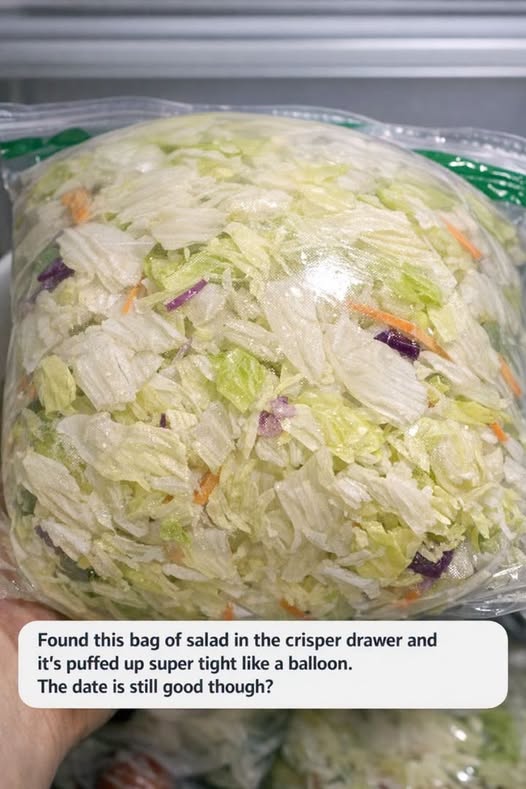
The ‘best by’ date is a guideline provided by manufacturers to indicate when the product is expected to be at its peak quality. It is not a safety date. While the salad may still be safe to eat after this date, its quality, texture, and flavor may have degraded.
Environmental factors such as temperature fluctuations in your refrigerator can cause spoilage before the ‘best by’ date. Therefore, while the date serves as a useful reference, other factors must be considered when determining the safety and quality of your salad.
5. Visual and Smell Checks: Signs Your Salad Has Gone Bad
Before consuming a salad from a puffed-up bag, inspect the leaves for any signs of spoilage. Discoloration, such as dark or slimy patches, is a clear indicator that the greens have gone bad. Also, check for an unpleasant, sour, or rotten smell, which signifies bacterial activity beyond safe levels.
If the salad appears fresh, with vibrant green colors and smells fresh, it might still be safe to consume. However, any doubts about its condition should lead to disposal rather than consumption.
6. When a Puffed Bag Is Normal—and When It’s Not
Not all puffed bags are a cause for concern. In some cases, manufacturers use modified atmosphere packaging (MAP) to extend shelf life by adjusting the gas composition inside the bag. This can cause bags to appear slightly inflated.
However, when a bag is excessively tight and shows signs of spoilage, such as a foul smell or slimy texture, it indicates abnormal bacterial growth and should not be consumed. Understanding the difference between normal packaging conditions and spoilage is key to making informed decisions.
7. Common Storage Mistakes That Speed Up Spoilage
Improper storage is a common culprit for accelerated spoilage. Storing salad bags in the warmest part of the fridge or not sealing them properly after opening can increase bacterial growth. Temperature fluctuations, such as frequently opening and closing the fridge door, can also contribute to spoilage.
To maximize freshness, store salad bags in the crisper drawer, which is designed to maintain optimal humidity levels for vegetables. Ensure the bag is tightly sealed after each use to minimize air exposure.