ADVERTISEMENT
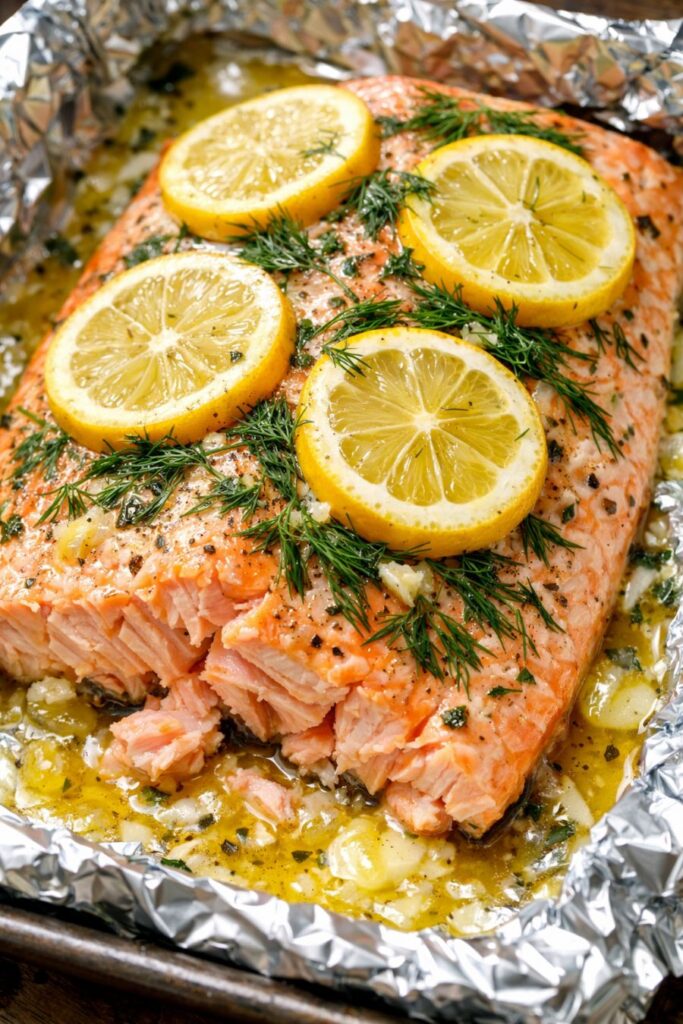
Every spring, my sister’s old farmhouse fills up with family, muddy boots by the back door and folding chairs squeezed around the dining room table. My aunt has never once arrived empty-handed, and this bright, flaky lemon dill salmon is her calling card. It’s the kind of dish that looks like you fussed all afternoon, but it’s really just four simple ingredients and a hot oven. The salmon comes out tender enough to flake with a spoon, bathed in melted butter, with sunny lemon slices and fresh dill that make the whole platter feel like the first warm day after a long Midwestern winter. If you’re watching your carbs or just want something light but comforting, this is about as foolproof as it gets.
I like to set this salmon right in its foil-lined tray in the middle of the table and let folks help themselves. It’s lovely with simple sides that soak up the buttery juices, like roasted asparagus, steamed green beans, or a crisp green salad with cucumbers and radishes. If you’re keeping things low carb, serve it alongside cauliflower mash or sautéed zucchini. For a bigger gathering, you can add a platter of sliced tomatoes and a bowl of dill pickles, and maybe some lemon wedges on the side for those who like an extra squeeze of brightness.
4-Ingredient Lemon Dill Baked Salmon
Servings: 4
Ingredients
1 1/2 to 2 pounds salmon fillet, skin-on if possible
4 tablespoons unsalted butter, melted
1 large lemon, half thinly sliced into wheels and half reserved for juice
3 tablespoons fresh dill, chopped (plus extra sprigs for garnish)
1/2 teaspoon kosher salt
1/4 teaspoon black pepper
Directions
Preheat your oven to 375°F (190°C). Line a baking sheet or shallow serving tray with aluminum foil, leaving enough overhang on the sides to loosely fold up around the fish.
Lay the salmon fillet in the center of the foil, skin side down if it has skin. Pat the top dry with a paper towel so the butter and seasonings will cling nicely.
Season the salmon evenly with the kosher salt and black pepper. Drizzle the melted butter over the top, letting it pool slightly around the edges so it will baste the fish as it bakes.
Next
ADVERTISEMENT
See more on the next page to continue reading →
ADVERTISEMENT