ADVERTISEMENT
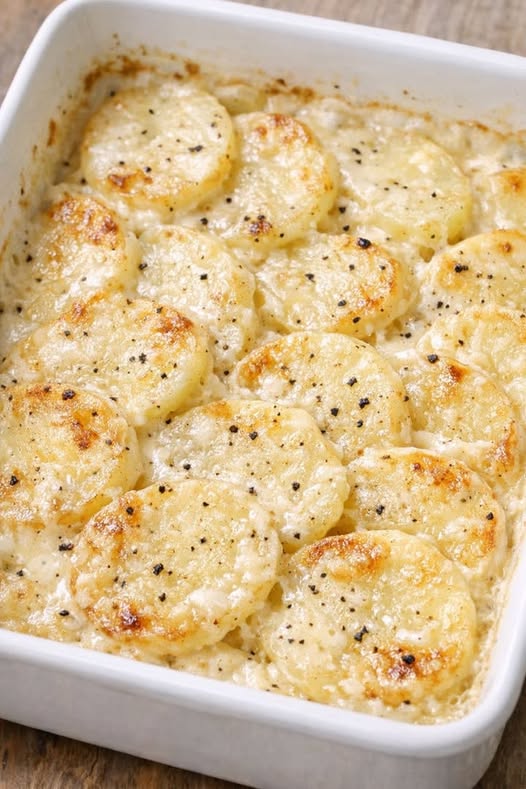
This oven baked 4-ingredients Amish milk potatoes recipe is the kind of humble, comforting dish that shows up at church suppers and neighborly potlucks all over the Midwest. My Amish neighbor brought a pan of these over one evening—tender sliced potatoes baked in a simple milk and butter bath—and I immediately begged her to walk me through the recipe. It’s as straightforward as it gets: just potatoes, whole milk, butter, and salt. The milk gently thickens in the oven, the butter enriches everything, and you end up with a creamy, pepper-flecked casserole that tastes far more luxurious than its short ingredient list would suggest.
Serve these Amish milk potatoes as a cozy side alongside roasted chicken, baked ham, or simple pan-seared pork chops. A crisp green salad or steamed green beans helps balance the richness, and a basket of crusty bread is perfect for soaking up the extra creamy milk and butter sauce from the bottom of the dish. They also reheat nicely next to leftover meatloaf or a vegetable roast, making them a practical make-ahead side for weeknights or Sunday dinner.
Oven Baked 4-Ingredients Amish Milk Potatoes
Servings: 6
Ingredients
2 1/2 to 3 pounds russet or Yukon Gold potatoes, peeled and thinly sliced (about 1/8–1/4 inch thick)
2 1/2 cups whole milk
6 tablespoons unsalted butter, plus extra for greasing the dish
1 1/2 to 2 teaspoons kosher salt, plus more to taste
Directions
Preheat your oven to 375°F (190°C). Generously butter a 9×13-inch (or similar) rectangular baking dish, making sure to coat the bottom and sides so the potatoes don’t stick.
Peel the potatoes, then slice them into even rounds about 1/8–1/4 inch thick. The more even the slices, the more uniformly they’ll cook and soften in the milk.
Layer the sliced potatoes in the prepared baking dish. You can simply spread them in an even layer or shingle them slightly, overlapping the slices like fallen dominoes. Aim for a fairly level surface so the milk covers them evenly.
Sprinkle the salt evenly over the potatoes. Use the lower amount if you prefer to adjust at the table; use the higher amount if you like a well-seasoned potato. Gently toss or lift a few slices here and there with clean hands to help distribute the salt through the layers, then smooth the top back out.
Cut the butter into small pieces and scatter them evenly over the potatoes. Try to get some butter pieces toward the edges of the dish as well as the center so it melts into the milk everywhere.
Slowly pour the whole milk over the potatoes, aiming to moisten all the slices. The milk should come just to the top layer or barely below it—enough to almost cover the potatoes without completely submerging them.
Cover the baking dish tightly with foil. Bake on the middle rack for 45–55 minutes, until the potatoes are mostly tender when pierced with the tip of a knife and the milk is hot and starting to thicken around the edges.
Remove the foil and continue baking, uncovered, for another 25–35 minutes. During this time the top will take on a soft golden color, the milk will reduce and thicken into a creamy sauce, and the potatoes will become fully tender. If the top is browning too quickly before the potatoes are soft, loosely lay the foil back over the dish.
Once the potatoes are completely tender and the milk and butter have formed a slightly thick, creamy sauce that bubbles gently around the edges, remove the dish from the oven. Let it rest for at least 10–15 minutes; this brief cooling time helps the sauce thicken further and makes the portions easier to scoop.
Before serving, taste a small forkful and adjust with a pinch more salt if needed. If you like a bit of bite, finish the top with a generous sprinkling of freshly ground black pepper, then serve the potatoes warm straight from the baking dish.
Variations & Tips
Because this recipe leans on just four ingredients, each one matters, but there’s still room for small, thoughtful variations. For the potatoes, Yukon Golds will give you a creamier, slightly buttery texture, while russets create a softer, almost fluffier result in the milk. If you only have 2% milk on hand, you can still make the dish, but expect a slightly thinner sauce; a tablespoon or two of extra butter can help restore some richness. Salt type also influences flavor—kosher salt is more forgiving; if using table salt, start with a bit less and adjust after baking. For a deeper, more caramelized top, move the dish to the upper third of the oven for the last 5–10 minutes of baking, watching closely so it doesn’t scorch. If your household enjoys more pronounced seasoning, you can quietly add a small pinch of garlic powder or nutmeg to the milk before pouring it over the potatoes, though the traditional Amish-style version keeps it to just the four core ingredients. Leftovers reheat well, covered, in a 325°F (165°C) oven until warmed through; if they seem a bit dry, stir in a spoonful of milk before reheating to revive the creamy texture.
ADVERTISEMENT