
Directions
Preheat your oven to 350°F (175°C). Lightly butter an 8×8-inch square glass baking dish, making sure to coat the corners so the pudding releases easily but still gets those nice sticky edges.
Prepare the dates: Place the chopped dates in a medium heatproof bowl. Pour the 1 cup of boiling water over the dates and sprinkle the 1 teaspoon baking soda on top. Stir gently and let the mixture sit for about 10 minutes. The dates will soften and the mixture will thicken slightly; this helps create that moist, almost pudding-like texture.
Mix the wet ingredients: In a large bowl, whisk together the melted 1/2 cup butter and the granulated sugar until the mixture looks glossy and slightly thickened. Add the eggs one at a time, whisking well after each addition, then whisk in the vanilla extract. You want everything fully combined but not over-beaten.
Combine the dry ingredients: In a separate small bowl, whisk together the flour, baking powder, and 1/4 teaspoon salt. This ensures the leavening is evenly distributed so the cake rises uniformly.
Build the batter: Stir the softened date mixture (including all the liquid) into the butter-sugar-egg mixture until evenly combined. The mixture may look a bit loose and speckled with dates—that’s exactly right. Gently fold in the flour mixture with a spatula just until no dry streaks remain. Overmixing can toughen the crumb, so stop as soon as it comes together.
Bake the pudding base: Pour the batter into the prepared glass baking dish and smooth the top. Bake on the center rack for 25–30 minutes, or until the top is set, shiny, and a toothpick inserted near the center comes out with a few moist crumbs but no wet batter. While it bakes, the dates will sink a bit and the edges will start to caramelize against the glass.
Make the sticky topping sauce: During the last 5–10 minutes of baking, combine the 1/2 cup brown sugar, 1/4 cup butter, 1/4 cup water or milk, and a pinch of salt in a small saucepan. Cook over medium heat, stirring frequently, until the butter melts and the mixture comes to a gentle simmer. Let it bubble for 1–2 minutes, stirring, until it looks smooth and glossy. Remove from heat; it will thicken slightly as it stands.
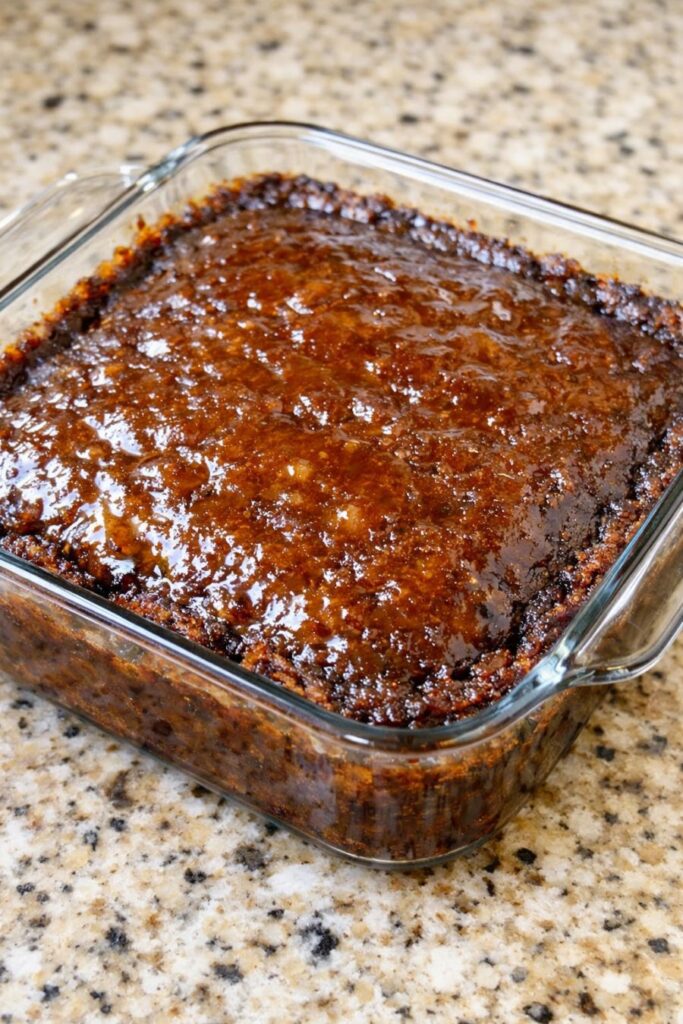
Finish the pudding: As soon as the cake comes out of the oven, poke it all over with a skewer or fork, going about halfway down into the cake. Slowly pour the warm brown sugar sauce evenly over the hot cake, letting it soak in and pool along the edges. The top will turn a deeper glossy caramel-brown as the sauce seeps into the crumb.
Rest briefly and serve: Let the pudding sit for at least 10–15 minutes to absorb the sauce and set up slightly. Serve warm, scooping or cutting squares straight from the glass dish. The edges should be sticky and caramelized, with a moist, tender interior that feels more like a soft pudding than a traditional cake.
Variations & Tips
For a slightly lighter texture, replace 1/4 cup of the all-purpose flour with finely ground oats or whole wheat pastry flour; it adds a bit of nuttiness without losing the sticky character. If you like a deeper caramel flavor, swap half of the granulated sugar in the batter for additional brown sugar. You can also add warm spices—1/2 teaspoon cinnamon and a pinch of nutmeg or cloves—to the dry ingredients for a more autumnal version. For a nutty twist, scatter 1/2 cup chopped toasted pecans or walnuts over the top right after you pour on the sauce, then let everything set together. If you need to make it ahead, bake the cake and keep it covered at room temperature, then rewarm gently in a low oven and heat the sauce just before serving. To reduce sweetness, thin the sauce with an extra tablespoon or two of water or milk and serve the pudding with unsweetened whipped cream to balance the richness.